
 Blattaria gets it. Every chill of enveloping existential dread that has run down your spine, every onslaught of unbearable misery and grief, every modicum of self-hatred, misanthropy, nihilism, and complete despair you’ve ever felt—they give name, and sound, to it all. The solo project of Oklahoma-based multi-instrumentalist Manuel Garcia, Blattaria weaves labyrinthine networks of dissonant, angular riffs, disarming meters and unconventional arrangements, and fluid drumming that never seems clinical yet aligns perfectly with every stab of chromatic climb or half-time transition. After “Intro” begins the new record Dream, Dwell, Die, I doubt a more fitting opener than “Web of Thoughts” could have been selected; not only does the mental image the title evokes mirror the spidery complexity of the music itself, but the lyrics move beyond the vileness and vehement loathing for humankind common in almost all black metal of this sort into a realm of deeply personal confession: “The walls are melting, / my vision is distorted, / anxiety attacks in waves, random memories appear before me. // I am suffocating in a massive / web of thoughts. // Perception is poison, / a curse that cannot be removed, / unless you kill the mind.” Beyond giving me flashbacks to a particularly horrible acid trip that nearly ended in me taking my own life, these words lend a new level of hatefulness to Blattaria’s music, making Dream, Dwell, Die a strong contender for the project’s best work yet. I’ll be coming back for the gloriously unhinged chaos of “I Hear the Insects…” alone many, many times.
Review: Staffers – In the Pigeon Hole (ever/never, Oct 16)
 Entire years are dense, complex, nonsensical things, and usually ascribing to them generalizations such as the following is something that should be reserved for some much more enlightened point in the distant future. But with 2020, I say we just grab and wrestle down whichever tentacle of the awful beast you can reach and put any label you want on it. Thus, the soundtrack to nearly 300 miserable days and counting: Staffers’ In the Pigeon Hole, overstuffed and delirious and self-referential and emotionally turbulent and kind of exhausting (sound familiar?). The newest full-length from D.C. renaissance man Ryan McKeever’s solo project is over in a flash brighter than its garish cover art, but its addictive hooks and essence that’s somehow simultaneously apathetic and ardent will keep pretty much anyone coming back again and again. After what appears to be someone talking about a particularly shoddy Wurlitzer knockoff, followed by a bit of lively carousel music presumably featuring the “cheap” puffs of the ersatz organ, “On Staples” bursts into existence with a raucous blast of energy, and acts as a proper introduction for the short album in more ways than one: on multiple occasions it prematurely quotes melodies and lyrics from upcoming micro-anthem “Fuck the Brixton,” one of the most memorable and infectious tracks that makes me miss the grotesque yet awe-inspiring spectacle of angry drunk people. McKeever is no siren, but as David Byrne said, “the better a singer’s voice, the harder it is to believe what they’re saying”; any sort of sugar-coating would distract from the honesty of the intimate storytelling, existential paranoia, and general anxiety. I often have to just sit back and humbly appreciate just how much great music is packed into these unforgettable 26 minutes—the stretch from the cathartic jangle romp of “Getting Thinner” to beautiful closing slide-guitar ballad “Just Another Tuesday” alone is stuffed with entire track list’s worth of dynamics. Use this amazing, earnest gift of an album for those all-too-frequent times when things are tough and an escape is needed, but you don’t want to forget misery entirely.
Mix: Grave Rave
The music plays, the bass thumps, thuds, thumps. The moon shines high overhead despite you being 90% sure you’re inside. Fog rolls in across the sticky beer-drenched floor and a chilling wind blows, but it just feels like a nice breeze to your overheated, sweat-drenched body. What’s that on your forearm? Looks like a rash. You go to scratch it and recoil in horror as a decent-sized chunk of skin comes off with a single rake of your fingernails. Kneeling down to pick up the glob of gore only causes more to slough off as the rotted flesh of your back splits wide open, exposing your spine and your rib cage, out of which slide two sluglike, smoke-blackened lungs. You look around in helpless terror to see all of the other clubgoers gleefully shedding their outer layers, down to realize that it’s not beer that stains the floor, but blood, and up to the ceiling/sky, where the moon now shines a deep orange, casting the mass of dancing, prancing skeletons below in a bath of jack-o-lantern light. Welcome to the grave rave.

00:00. Kim Petras – “Close Your Eyes” from Turn Off the Light (BunHead, 2019)
03:47. Darkless – “Unholy” from Unholy (No Tomorrow, 2020)
08:14. Pink Tooth – “Unlock” from Mustard (self-released, 2016)
10:21. Owl Vision – “Dead Shall Rise” from The Black Plague (DGA Fäu, 2011)
14:26. Knife Party – “Ghost Train” from Lost Souls EP (self-released, 2019)
18:42. Toy Shoulders – “Crypt Delivery” from EP G (self-released, 2017)
21:13. KSHMR – “It Follows [Halloween Special Remix]” (self-released, 2015)
24:12. Video Life – “Inner Thought” from Eat Your Friends EP (EDM Network, 2015)
31:19. Randomer – “Stigma” from HS002 (Headstrong, 2018)
37:00. clipping. – “Body & Blood” from CLPPNG (Sub Pop, 2014)
Review: Rich Teenager – Sardanapalus (self-released, Oct 16)
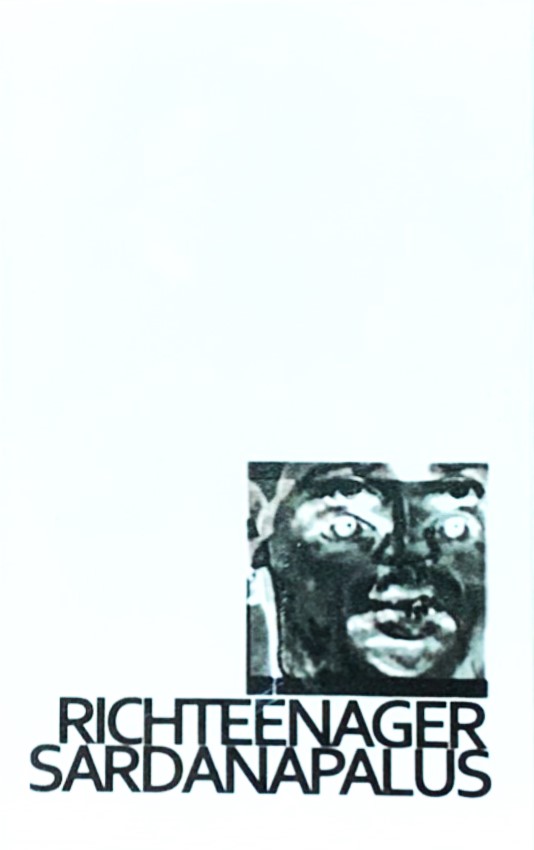 I’ve been a middle-class teenager my whole life, but oh how I dream of one day becoming a rich teenager: even more privilege and less accountability than I already have, parents who don’t give two shits about me, my very own sports car to drunk-drive at top speed through the side of an orphanage and shrewd lawyer to get off scot-free. On Sardanapalus, the self-proclaimed Rich Teenager makes a convincing case for the enlightened paradise that is their existence with a fruitful offering of completely useless, utterly unengaging sounds—because at the heart of the fleeting, saccharine “happiness” of great wealth is a yawning emptiness only temporarily filled by the joy of new consumer appliances, vehicles, or tax breaks. After the miniature UFO chorus of “Topsite Theme,” a nearly 20-minute reverie of sonic castoffs and leftovers takes shape in the meandering title track, constant churning tape static stripped of its meaningful contents and microscopic shreds of electronica blending with a distant warbling whine to produce a piece that is intensely engrossing in its unyielding ennui-scape. The following “E.E.O.” feels like a clump of junk of a different sort, much louder and more active, yet retains the strange subversive quirks that make this tape what it is: uncompromising repetition, unexpected deconstructions, a general disregard for appeal of any kind. “Jazz Entre Amigos” unfolds like a recording of a chaotic fire drill in a large office building played backwards, “Tushy&” like a troubled robot having a very public breakdown (along with an ending sample both hilarious and unsettling), “This Eminence of Guilt” like someone just stuck their grubby hand into the innards of a Casio and mercilessly groped around. As you can probably see, the fanfare of the rich teenager is the highest form of music, effortlessly towering above the so-called “notes” and “rhythm” of the commoners and even the self-congratulatory bourgeois avant-garde. Sorry peasant; don’t talk to me until you’ve evolved.
Review: Horaflora – Eaves Drop (enmossed, Oct 15)
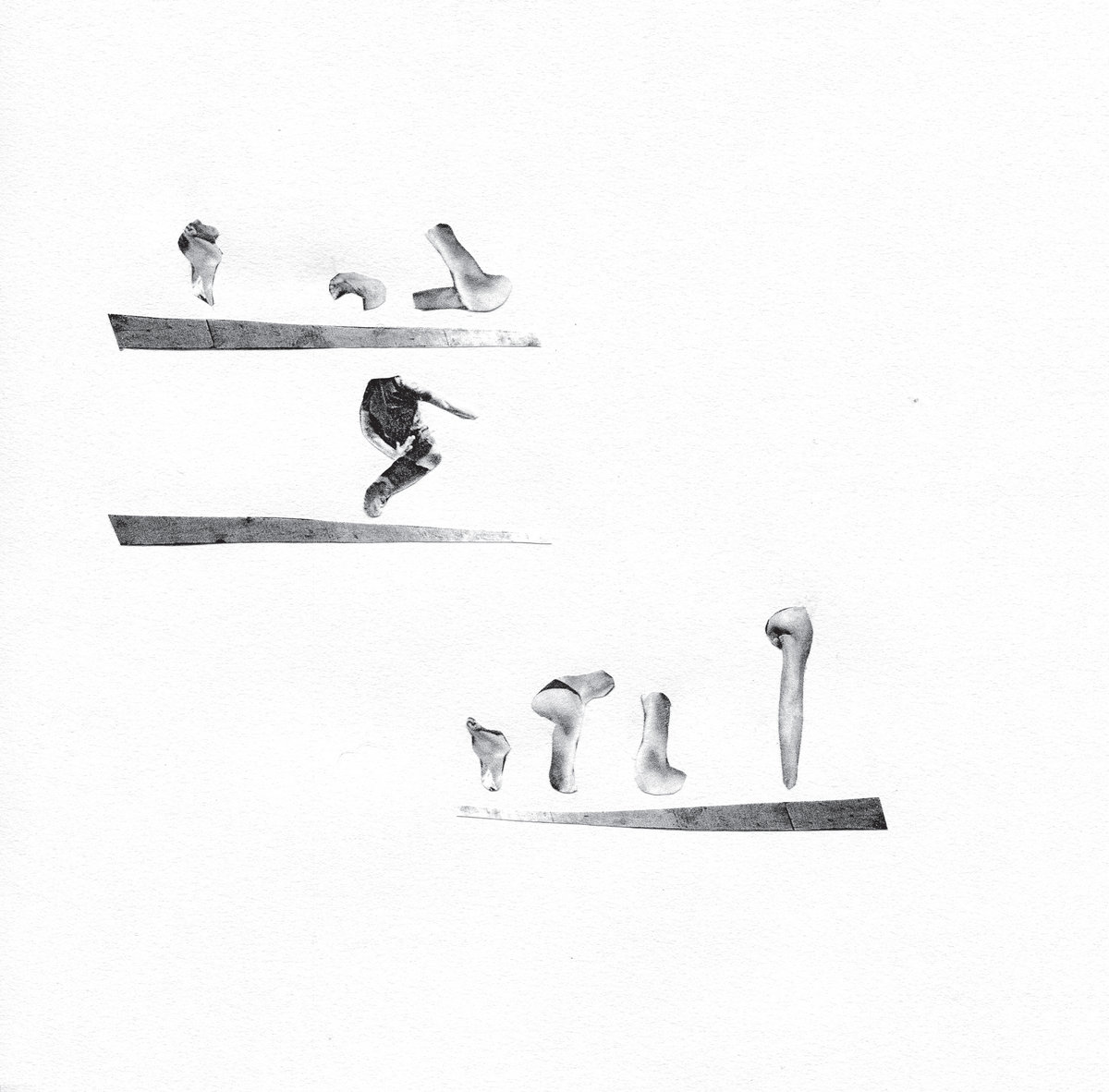 Since the release of The Gland Canyon in 2007, Raub Roy’s ongoing project Horaflora has increasingly moved toward an organic approach to quotidian improvisation that melds seamlessly with its surroundings, the two entwining and interacting to produce unforgettable phantasmagorias of colorful textures. Eaves Drop is Roy’s first non-live solo LP since 2012, but such a significant gap does not at all translate to a lack of inspiration or improvement upon what came previously; this lovely vinyl edition offers three new tracks that are, without a doubt, Horaflora’s best work yet. Each piece breathes like a living thing, slow inhales and exhales churning the flow of sound into languid eddies and currents, moving between ever-unpredictable racket generated by various tabletop configurations and deeply immersive environment recordings (accompanied by some other bells and whistles along the way, of course, such as brief snatches of saxophone or the plunks of a cheap plastic synthesizer) with breathtaking ease. As with Shots’ Private Hate last year, there is certainly a distortion of participation and pure perception occurring here, but on Eaves Drop these blurred boundaries are simultaneously more defined and harder to actually make out—take the concluding “Motorcycles Were Suddenly Observed at All Hours,” for example: were one to hear the spacious binaural capture of a massive, humming warehouse and the screeching string creak-drones that follow it separately, it wouldn’t be at all difficult to discern which was performed and which was simply observed, but when placed in such close proximity each casts a shadow of ambiguity upon the other. There is also humanity aplenty throughout, overheard conversations and laughter of playing children and the soothing swish of bustling traffic, just one of the countless layers of this album that are seemingly allowed to grow, intermingle, and flourish on their own.
Review: Unknown Artist – Campfire Tales (Tribe Tapes, Oct 14)
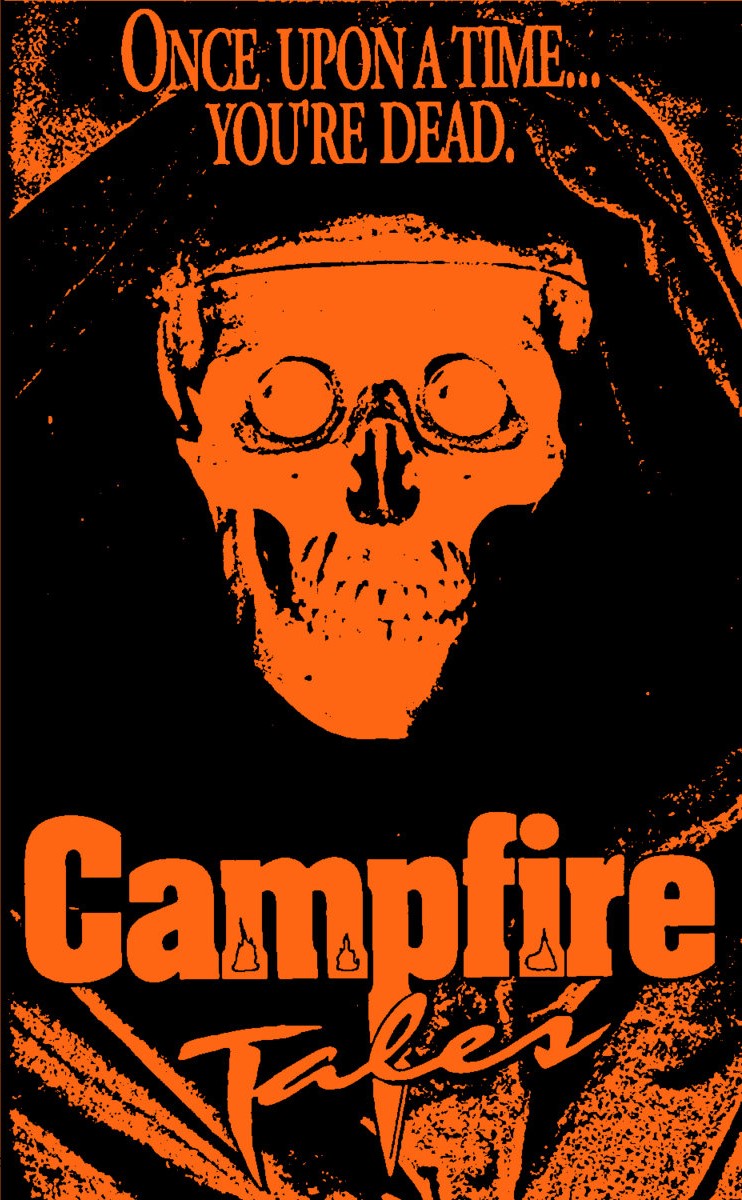 Releasing your work anonymously—and, by extension, all degrees of personal/authorial removal, whether it is credited to an artist or not—is an artistic decision in itself, with its own benefits and drawbacks. The main issue one encounters is that pretty much all of us, being human, want to feel emotion from things, and for most of us, being lovers of humans, instinctively want to see or hear or feel the creator come through in their creations. But unclaimed collages like Sensitivity Training and this pleasingly spooky sample suite from an unknown source on Tribe Tapes have proven to me that not only does the lack of an attributed arranger have a palpable effect on the material, but it also functions differently for different works. While Sensitivity Training bypasses both the grotesque indulgence and the unethical exploitation of Buyer’s Market—in part due to its anonymity and in part due to the much more compassionate and purposeful compiling—to open the gates for true emotion and empathy, the half-campy, half-unsettling tales, tunes, and textures of Campfire Tales gain a complementary obscurity from the omission, and with the saturated black ink xeroxed onto orange paper the album becomes something intoxicatingly mysterious. The ordering of the sounds sounds both episodic and cohesive somehow, as bits of distorted guitar or pounding piano, the ominous trill of crickets at night, and various audio-horror vignettes (including the “hook man has escaped” story; what does it say about me that the first thing I thought was, Is this from Scream Queens?) that never reach the tense, terrifying conclusions they seem to be barreling toward, leaving us with unfinished business in our heads that often carries over to whatever bizarre segment is up next. It’s a wild ride, for sure, and perfect if you are into the hermetic Halloween thing: Pumpkin Witch, Cursed Pumpkin and all of the “pumpkin synth” projects (yes there are quite a few), or even A Cool Dark Place to Die.
Review: Condo Horro – Thin Red Line (Fall Into Void, Oct 13)
 There are very few noise artists that provide a double-dose of eclecticism and quality across their various projects at the same intensity as Peter Keller. The Seattle stalwart has previously graced the pages of Noise Not Music with his wildly disparate Bacillus and Dirac Sea outlets (the former is focused on brash, dirty, abrasive harsh noise with themes of disease and contagion, while the latter transposes wall noise textures to a realm of infinite cosmic beauty), but until now I was unfamiliar with Condo Horro, another wall alias that seems to be almost entirely focused on examining themes of gentrification, segregation, redlining, and other forms of the grotesque racism that plagues urban planning to this day. The ambitious Thin Red Line box set has nothing to do with Terrence Malick’s 1998 war-epic and everything to do with the titular process, which is directly defined on the cover of the release as “the systematic denial of services by government agencies and commercial institutions to residents of black [sic] and other minority neighborhoods or communities.” As we’ve seen from the past decade alone, the relatively restrictive conventions of the wall noise genre have paradoxically allowed a level of diversity and creativity to flourish among artists who work with them, and this release is just another example of those curious and fascinating implications. Conceptually, Thin Red Line couldn’t be more direct—the cover features a planning map of Dayton, OH (a city not too far from me, actually, and what I think may be Keller’s home town), the aforementioned definition, and heavily expository track titles—but the same directness doesn’t seem to be present in the relationship between that concept and the music. At least, not at first. But just like the countless Dirac Sea albums I’ve heard, these walls take time to fully unfurl, time that often extends beyond their actual run times. The opening two tracks on the C10 blast with incendiary fury, while the following pair on the C30 draw back a bit, eventually revealing that they are not at all homogeneous, instead borrowing a linearity of progression from the field recordings that are subtly incorporated, occasional artifacts buried in the outskirts of the stereo field constantly expanding the breadth of the seething static. “Legacy of Racial Deeds and Covenants” is almost achingly stagnant and detached, a consuming yet understated portrayal of the ever-unutterable, while closer “Exclusionary Real Estate Development” combines punishing distortion with a profound emptiness that stubbornly refuses to be filled. Such an abstractly symbiotic relationship between concept and content is what makes Condo Horro, and Keller’s work in general, as magnetic and valuable as it is.
Mix: Wholesome Halloween
Halloween has been my favorite holiday literally since I was born. See below for proof—I’m on the left. I hope you enjoy this collection of wholesome Halloween tunes (appropriate for all ages).

00:00. Lonesome Wyatt and the Holy Spooks – “Halloween Is Here” from Halloween Is Here (Tribulation, 2013)
02:24. Ray Parker Jr. – “Ghostbusters” from Ghostbusters Original Soundtrack (Arista, 1984)
06:19. Dead Man’s Bones – “In the Room Where You Sleep” from Dead Man’s Bones (Anti-, 2009)
09:29. The Marshmallow Ghosts – “The Hearse Song” from The Marshmallow Ghosts (Graveface, 2011)
13:10. Oingo Boingo – “Dead Man’s Party” from Dead Man’s Party (MCA, 1985)
19:30. DJ Jazzy Jeff & The Fresh Prince – “A Nightmare on My Street” from A Nightmare on My Street (Jive, 1988)
24:28. David Bowie – “Scary Monsters (and Super Creeps)” from Scary Monsters (RCA, 1980)
29:17. Whodini – “The Haunted House of Rock (Extended Version)” from The Haunted House of Rock (Jive, 1983)
35:45. Rockwell – “Somebody’s Watching Me” from Somebody’s Watching Me (Motown, 1983)
39:31. Orange Hell – “Hybrid Moments” (Misfits cover) from Three Hits From… (Funeral Party, 2018)
Review: Henry Collins – Prepared Rain (zamzam, Oct 5)
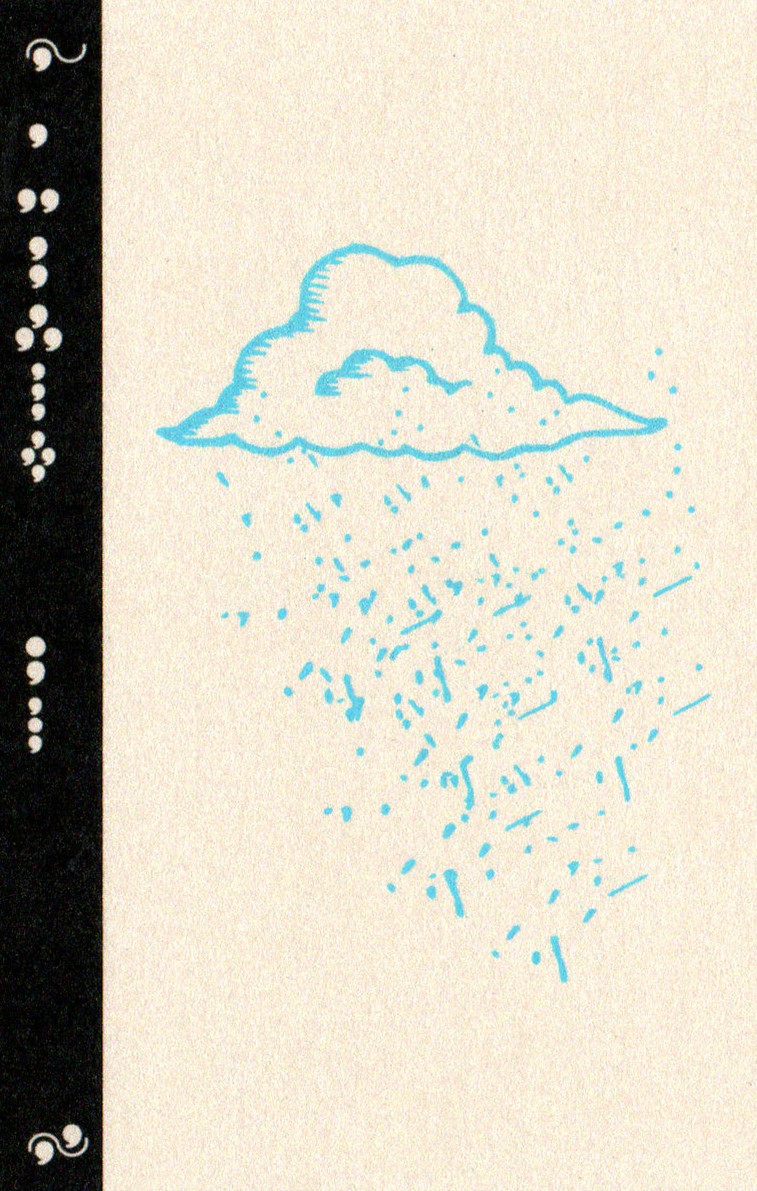 After Tuesday’s review of Raven Chacon’s new album, the gloomy water-filled grey skies of today’s edition of The Slog™ bring me to examine another recent work by a sound artist with a sporadic release schedule. Though Henry Collins has a formidable arsenal of aliases and side projects credited to him, since 2013 he’s only put out a few things under his own name: a couple of splits with fellow UK noisemaker Robin Foster, the sprawling Astral Projecting on S.S Great Britain on Treguard, and a pair of fascinating sonic redaction/erasure works on Seth Cooke’s Every Contact Leaves a Trace (Music of Sound, which consists of the audio of The Sound of Music, and The Masters, which features recordings from the BBC broadcast of the titular golf tournament; both sources have had any speech, music, or other impurities removed). It’s clear that Collins doesn’t shy away from either totalism or absurdity—indeed, the two often come inextricably hand-in-hand—in developing the conceptual basis of his art, an open-mindedness that makes his music some of the most fascinating I’ve ever heard. Prepared Rain, to my knowledge, is something new, less focused on direct defilement or fundamental alteration of relevant sources/mediums and more on, unsurprisingly, active preparation. Playing back the audio of a movie with all of the voices and songs scalpeled out is a relatively passive creative role, but for the 55 minutes of this new tape Collins is ostensibly always moving around, rearranging various elements of his haphazard “drum kit for the sky” as well as repositioning the microphones capturing the sounds of the raindrops hitting it. For the completely passive role the rain has in this process, it acts as a surprisingly astute agent of dynamics and pacing, sending the makeshift soundmaking spiderweb—comprised of what could be anything from plastic bowls and cups to elaborate metal contraptions and Rube Goldberg machines—into a lushly cacophonous blanket of percussive textures at the outset of the album, slowly easing its weight and breadth as the track progresses, then following up this faltering frenzy with a sparser and more rhythmic B side. This is music for rain at any time of the day, or even to provide the sound of rain when it’s desired but can’t be found. As Mark Anthony Pierce says in the foreword, “I hope you get thoroughly soaked listening to this.”
Review: Raven Chacon – An Anthology of Chants Operations (Ouidah, Oct 2)
 “Deeply introspective, Chacon’s work rests at the root meaning and intention of experimental practice. It is the outcome of an action that, at its inception, responds to a question for which the answer is unknown. In his hands, sound is a raw, democratic material, with a near infinite number of possibilities and sources—sometimes found and encountered, others self-generated—reformed into an image that refract the notions of humanity and being outside of themselves.”
This short paragraph does more to properly introduce the sonic tour-de-force that is An Anthology of Chants Operations than I probably ever could. Rarely does one hear a work so intensely devoted to the primordial traditions of “sound art”—installation, performance instructions, constrained improvisations—and yet still so personal and emotionally resonant, beyond the “pure,” textural beauty of the sounds themselves. I highly recommend digging deeper into the write-up on the release’s Bandcamp page, as it offers titles and astute description-analysis captions for each of the LP’s nine pieces, which together unfold like episodic suites despite being composed or conceived separately. The territory Raven Chacon explores here is immense (almost as immense as the breadth of his work across countless other art forms): intimate, almost abrasive physicality; sustained meditation; innocence, tentativeness, cultural disconnect (“MVHS”); collage and combination; the list goes on. Violent rushes of air forced from an unknown source, twittering squeaks and bubbling warbles land somewhere squarely between artifice and nature, discrete but sprightly cacophonies of rustling tendrils swarm a space as tectonic shifts groan ominous below. Rather than homing in creatively on a limited formal or stylistic focus, Chacon looks to them all to find the most effective outlet for what he wants to do—and succeeds each and every time. An Anthology of Chants Operations sees the Diné artist at the peak of his powers in the auditory plane.
“Filled with life, vitality, and the curiosity that follows, Raven Chacon’s An Anthology of Chants Operations presents a wildly expanded and revitalized notion of experimental practice that stretches far beyond the potentialities within which it is normatively conformed. A deeply human music, asking after the effects of place on who we are.” (again, better than I could ever do)
 Noise Not Music