 The first track on De ossibus 20, sound artist Kiera Mulhern’s debut full-length, is like a slow submerging into a bath of perfectly warm water. It proceeds through a murk of churning haze with ease: languid spin cycle drone, ghostly chatter, tactile shift. The extra-soft rug is soon pulled from under our feet, however, for Mulhern’s own voice finally surfaces after an unceremonious snatching-away of that fragile fog-scape, rising in layers of wavering vocalizations that twitch with distortion, skips, and shudder as they begin to thicken and coalesce before ultimately ceasing to let some muffled coffee shop ambience to close out the track (McCann describes the LP as “burying a microphone in a book”; I’m not sure if he meant it literally, but here it certainly sounds as if we’re closed out of something yet still near enough to hear it). Mulhern’s superb ear for the extremely abstract poetics of the voice-in-place is no fluke, for the remaining tracks on De ossibus 20 continue to offer up a plethora of delightful texture-stew, from the seething, organic effervescence and lush garble of “Self-auscultation 5/24/20” to the paranoid whispers and ambiguous spatiality of “Sow”; from the hair-raising sound-web and unfinished statements of “Signs in the memory” to the deeply immersive sonic environment and tentatively blown recorders of the concluding “Syrinx.” Works that are truly abstract while also feeling extremely intimate are rare, but Mulhern’s singular explorations, despite their constant elusiveness, strike emotional chords far, far below one’s conscious radar.
Mix: All Hallows’ Eve
This is the fourth and final of my Halloween mixes. Tomorrow is the big day, so here is a collection of immersive horror-soundscape tracks, spooky samples, and general scariness to get you in the spirit.
00:00. JC Greening – “Trick ‘r Treat” from Halloween Haunts & Terror Tales Volume I: Trick ‘r Treating for Children (self-released, 2018)
02:46. Walt Disney Sound Effects Group – “The Dungeon” from Halloween Songs & Sounds (Walt Disney, 1997)
05:37. Tobe Hooper & Wayne Bell – main titles from The Texas Chain Saw Massacre (dir. Tobe Hooper, 1974)
08:55. KevOz – excerpt from “Part 2” of Haunted Halloween: 1 Hour of Spooky Music and Scary Sound Effects (self-released, 2017)
13:04. Black Mountain Transmitter – excerpt from Behold the Undead of Dracula (Lysergic Acid, 2019)
16:40. Nick Reinhart – “Post-Slaughter” from Scary Sounds II (self-released, 2014)
19:59. Vacation Bible School – “t h e _ s a t a n i c _ p a n i c” from Fall Festivals and the Satanic Panic (self-released, 2019)
23:52. Edward Is My Middle Name – “heed” from Halloween / Autumn (wdgrain, 2018)
25:31. Loyalty Freak Music – “The Swamp” from Witchy, Batty, Spooky, Halloween in September !! (self-released, 2018)
28:39. Unknown Artist – excerpt from side B of Campfire Tales (Tribe Tapes, 2020)
32:08. Avery Alexander – “Butcher” from Halloween 2020 (self-released, 2020)
35:00. Climax Golden Twins – “Disappointed Expectations” from Session 9 (Milan, 2001) [continues to end]
37:36. Kill the Hippies – “Buried Alive (Just Before Retirement)” from Spectacular Halloween Sound Effects Vol. I (Phoenician MicroSystems, 2015)
Review: RODEOGLO – BLVCKHEVRT (Dismiss Yourself, Oct 21)
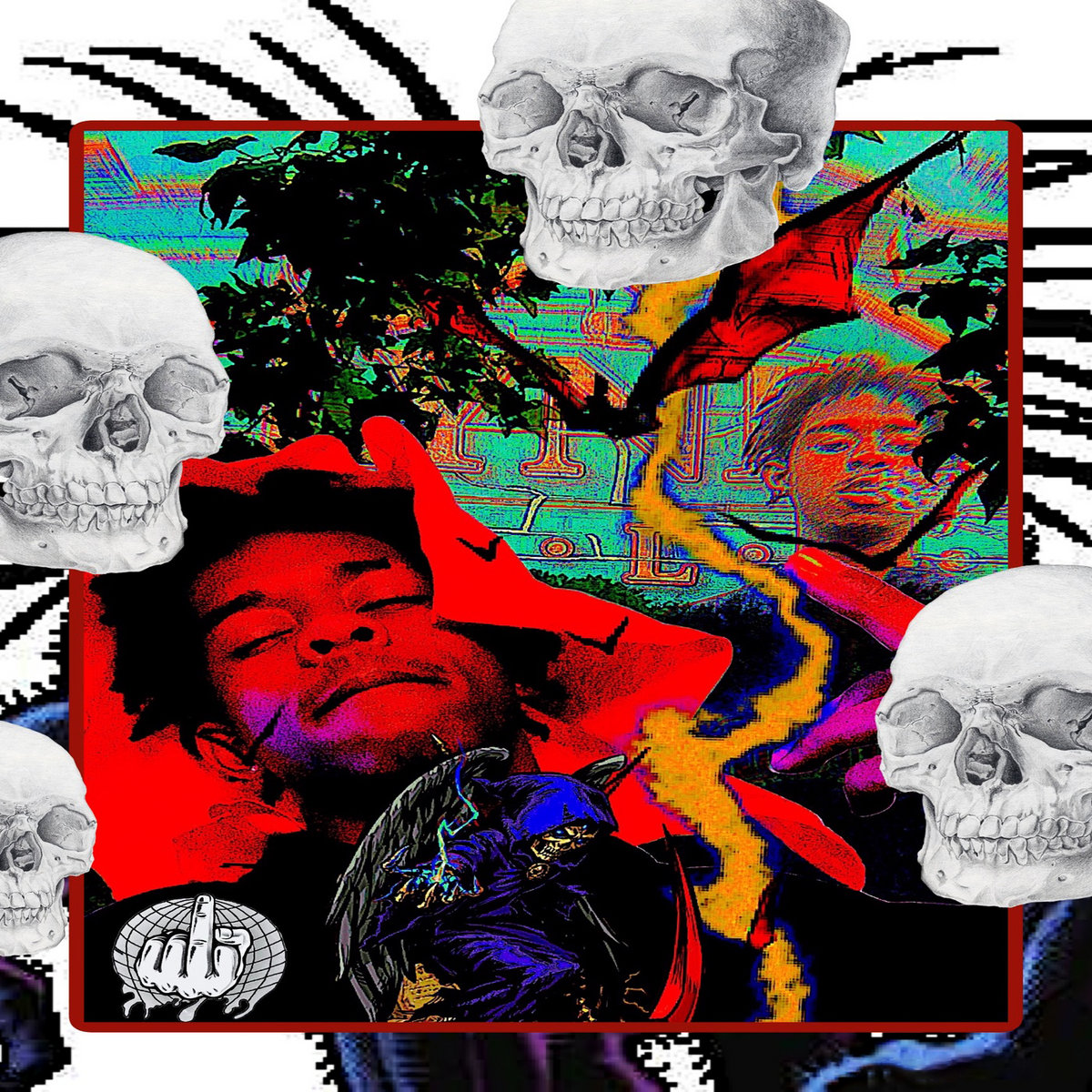 From my limited experience with the discipline, I’ve gradually gathered that there are three types of producers: those who excel when composing for other artists, those who excel when composing their own work, and those who excel at both. Norfolk-based beatmaker and sample sculptor RODEOGLO definitely belongs to that last group, able to reserve the most lush and garish soundscapes for his own mind-bending tracks while also creating instrumentals that function much better as complementary backing for other MCs. BLVCKHEVRT, released by newcomer label Dismiss Yourself, is RODEOGLO’s first full-length solo set, a surreal dreamscape of rattling hi-hat patches, vocal excerpts and hooks autotuned to near-unintelligibility, and endless layers of sheeny synth textures and enveloping bass to get hopelessly lost inside. The first few tracks are mostly instrumental aside from the heavily processed vocals, yet handily succeed in whipping up a joyously frenzied atmosphere of thick smoke and saturated color. “AK-47” puts Sematary to shame with its excellent sluggish trap crooning, the pounding percussive energy of “ETHEREAL” seethes underneath a fiery verse from Lil Pablo, “EAST SIDE SWAG XXX” swaggers along with a gritty Memphis-esque bounce—and those are only three of the twelve equally fantastic songs on the tape. The handful of features are distributed with panache, from the aforementioned electricity of the Lil Pablo track to the almost somnambulistic-sounding contributions from LZA and Krone on the hazy “SLIDE.” RODEOGLO handles almost all of the production on BLVCKHEVRT, co-producing on two tracks and handing the reigns to NXSTA for “TWEAKER,” which with its hilarious Mario samples and artful bitsmashing ends up being one of the tape’s most memorable. A singular and exciting official debut from this talented artist.
Review: Kouns & Weaver – The 1990 Cincinnati Reds (self-released, Oct 20)
 I have a strange relationship with baseball. I played for a few little league teams when I was a wee lad, I’m always up to play some catch, and I will probably go to a few more games before my inevitable death. But overall I see baseball as something deeply wrapped in nostalgia, both my own and that of the collective United States (it is “America’s Pastime,” after all), and in my mind it’s become an institution that I am more just grateful exists at all rather than one that resonates much with me personally. A large part of that gratitude comes from the staggering range of art that baseball and its singular sentimentality—”Pafko at the Wall,” The Universal Baseball Association, Inc., J. Henry Waugh, Prop., The Sandlot, that legendary scene in High School Musical 2—something that has been present my whole life growing up in Cincinnati. The Reds seem to hold an even more fervent intensity of reminiscence than many teams, and among all sorts of people. Zack Kouns and Rick Weaver team up once again on The 1990 Cincinnati Reds to pay their own brand of homage to one of the two legendary seasons in Reds history (the first was in 1900, as you’ll learn in opening track “Billy Hatcher”). This is no faithful historical reenactment or revival; the pair of Tennessee weirdos instead embark on an irreverent, surreal reimagining of these people and their lives, an approach that could conceivably be seen as disrespectful and yet just… isn’t. It’s similar to what Barthelme did with Robert Kennedy, I think, and I’m sure there are more examples that aren’t coming to mind at the moment. Kouns contributes the spoken aspects of the album, which tell tales of death, the cosmic, the supernatural, “a young Colombian girl with six arms to crush the heads of the wild and wicked and the pure-hearted alike” (who is none other than Mariano Duncan)… it’s quite the adventure. Weaver, who I learned of through his band Form a Log, builds intricate, hallucinatory rhythmic backing for Kouns’ often unrelenting deadpan delivery, plasticky drum patches and sheeny synths and quirky electronic burbles that make this phantasmagoric album even more of a compelling curiosity. The 1990 Cincinnati Reds is not nearly as (properly) educational as one might expect, but it will probably still teach you a lot of things—things you may not want to know, perhaps, but willful ignorance has never helped anyone.
“This one belongs to the Reds.”
Review: Blattaria – Dream, Dwell, Die (A Fine Day to Die, Oct 18)
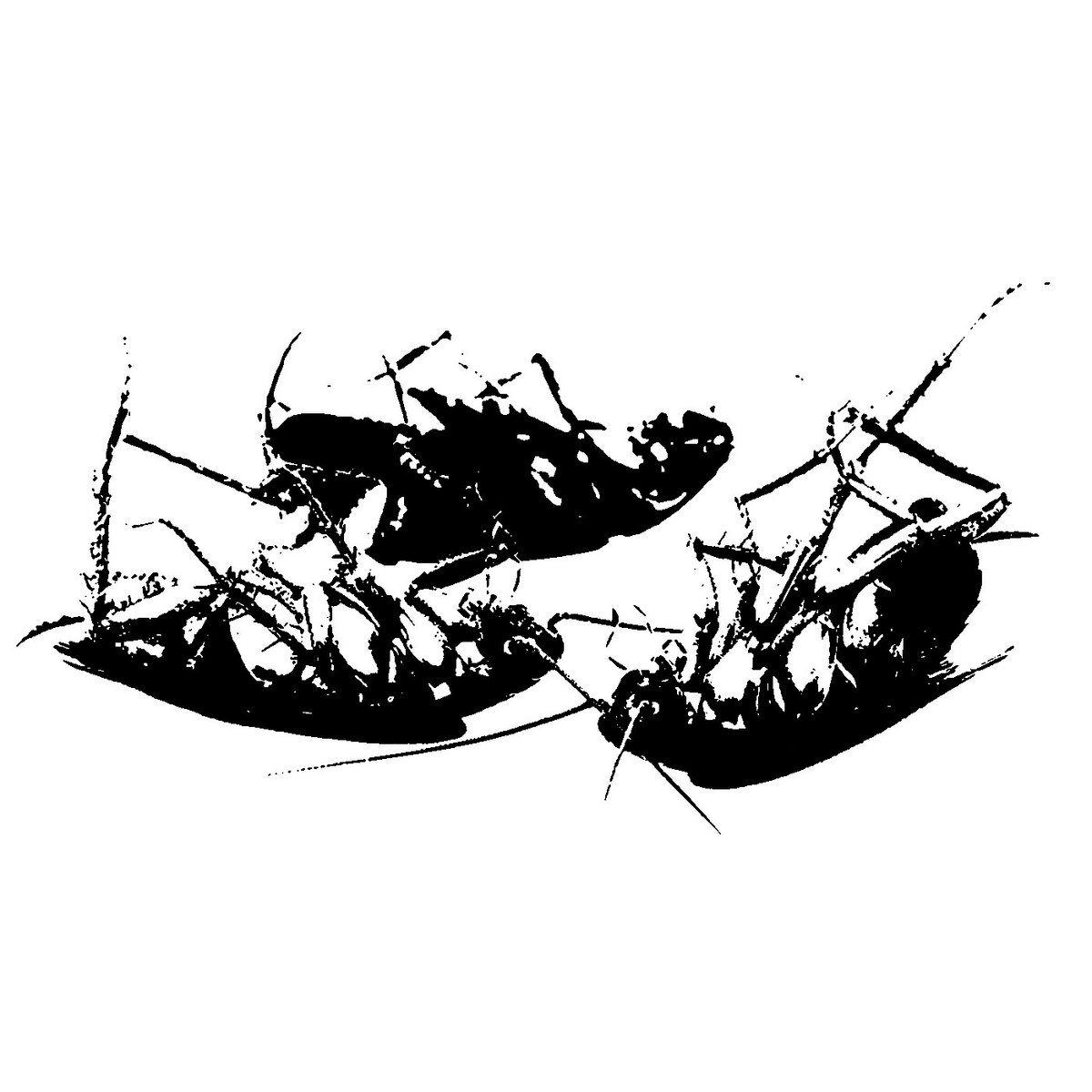 Blattaria gets it. Every chill of enveloping existential dread that has run down your spine, every onslaught of unbearable misery and grief, every modicum of self-hatred, misanthropy, nihilism, and complete despair you’ve ever felt—they give name, and sound, to it all. The solo project of Oklahoma-based multi-instrumentalist Manuel Garcia, Blattaria weaves labyrinthine networks of dissonant, angular riffs, disarming meters and unconventional arrangements, and fluid drumming that never seems clinical yet aligns perfectly with every stab of chromatic climb or half-time transition. After “Intro” begins the new record Dream, Dwell, Die, I doubt a more fitting opener than “Web of Thoughts” could have been selected; not only does the mental image the title evokes mirror the spidery complexity of the music itself, but the lyrics move beyond the vileness and vehement loathing for humankind common in almost all black metal of this sort into a realm of deeply personal confession: “The walls are melting, / my vision is distorted, / anxiety attacks in waves, random memories appear before me. // I am suffocating in a massive / web of thoughts. // Perception is poison, / a curse that cannot be removed, / unless you kill the mind.” Beyond giving me flashbacks to a particularly horrible acid trip that nearly ended in me taking my own life, these words lend a new level of hatefulness to Blattaria’s music, making Dream, Dwell, Die a strong contender for the project’s best work yet. I’ll be coming back for the gloriously unhinged chaos of “I Hear the Insects…” alone many, many times.
Review: Staffers – In the Pigeon Hole (ever/never, Oct 16)
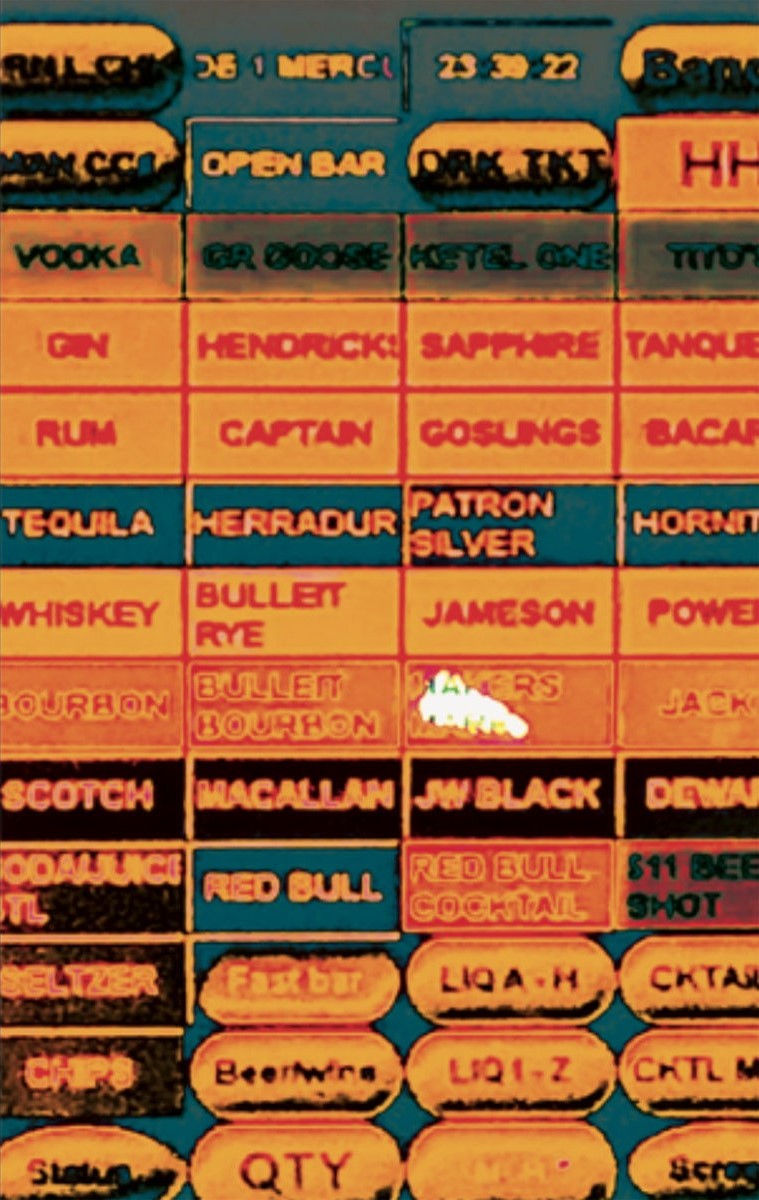 Entire years are dense, complex, nonsensical things, and usually ascribing to them generalizations such as the following is something that should be reserved for some much more enlightened point in the distant future. But with 2020, I say we just grab and wrestle down whichever tentacle of the awful beast you can reach and put any label you want on it. Thus, the soundtrack to nearly 300 miserable days and counting: Staffers’ In the Pigeon Hole, overstuffed and delirious and self-referential and emotionally turbulent and kind of exhausting (sound familiar?). The newest full-length from D.C. renaissance man Ryan McKeever’s solo project is over in a flash brighter than its garish cover art, but its addictive hooks and essence that’s somehow simultaneously apathetic and ardent will keep pretty much anyone coming back again and again. After what appears to be someone talking about a particularly shoddy Wurlitzer knockoff, followed by a bit of lively carousel music presumably featuring the “cheap” puffs of the ersatz organ, “On Staples” bursts into existence with a raucous blast of energy, and acts as a proper introduction for the short album in more ways than one: on multiple occasions it prematurely quotes melodies and lyrics from upcoming micro-anthem “Fuck the Brixton,” one of the most memorable and infectious tracks that makes me miss the grotesque yet awe-inspiring spectacle of angry drunk people. McKeever is no siren, but as David Byrne said, “the better a singer’s voice, the harder it is to believe what they’re saying”; any sort of sugar-coating would distract from the honesty of the intimate storytelling, existential paranoia, and general anxiety. I often have to just sit back and humbly appreciate just how much great music is packed into these unforgettable 26 minutes—the stretch from the cathartic jangle romp of “Getting Thinner” to beautiful closing slide-guitar ballad “Just Another Tuesday” alone is stuffed with entire track list’s worth of dynamics. Use this amazing, earnest gift of an album for those all-too-frequent times when things are tough and an escape is needed, but you don’t want to forget misery entirely.
Mix: Grave Rave
The music plays, the bass thumps, thuds, thumps. The moon shines high overhead despite you being 90% sure you’re inside. Fog rolls in across the sticky beer-drenched floor and a chilling wind blows, but it just feels like a nice breeze to your overheated, sweat-drenched body. What’s that on your forearm? Looks like a rash. You go to scratch it and recoil in horror as a decent-sized chunk of skin comes off with a single rake of your fingernails. Kneeling down to pick up the glob of gore only causes more to slough off as the rotted flesh of your back splits wide open, exposing your spine and your rib cage, out of which slide two sluglike, smoke-blackened lungs. You look around in helpless terror to see all of the other clubgoers gleefully shedding their outer layers, down to realize that it’s not beer that stains the floor, but blood, and up to the ceiling/sky, where the moon now shines a deep orange, casting the mass of dancing, prancing skeletons below in a bath of jack-o-lantern light. Welcome to the grave rave.

00:00. Kim Petras – “Close Your Eyes” from Turn Off the Light (BunHead, 2019)
03:47. Darkless – “Unholy” from Unholy (No Tomorrow, 2020)
08:14. Pink Tooth – “Unlock” from Mustard (self-released, 2016)
10:21. Owl Vision – “Dead Shall Rise” from The Black Plague (DGA Fäu, 2011)
14:26. Knife Party – “Ghost Train” from Lost Souls EP (self-released, 2019)
18:42. Toy Shoulders – “Crypt Delivery” from EP G (self-released, 2017)
21:13. KSHMR – “It Follows [Halloween Special Remix]” (self-released, 2015)
24:12. Video Life – “Inner Thought” from Eat Your Friends EP (EDM Network, 2015)
31:19. Randomer – “Stigma” from HS002 (Headstrong, 2018)
37:00. clipping. – “Body & Blood” from CLPPNG (Sub Pop, 2014)
Review: Rich Teenager – Sardanapalus (self-released, Oct 16)
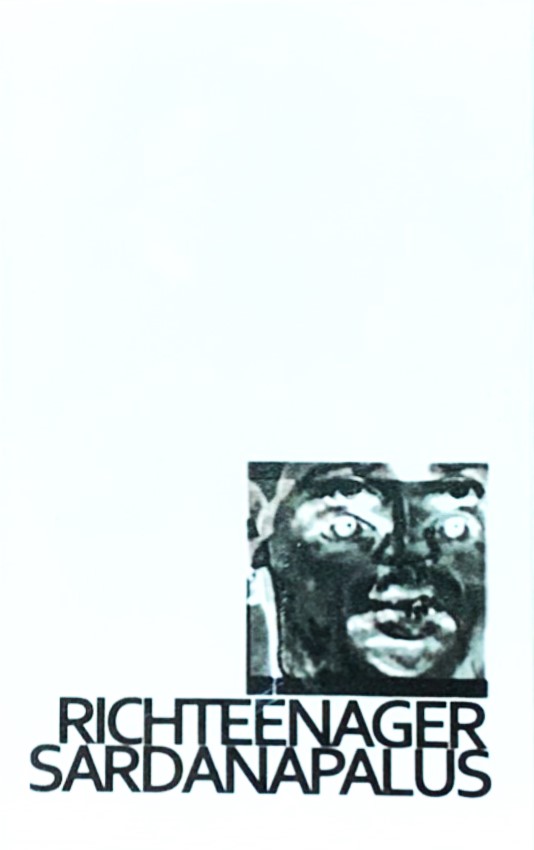 I’ve been a middle-class teenager my whole life, but oh how I dream of one day becoming a rich teenager: even more privilege and less accountability than I already have, parents who don’t give two shits about me, my very own sports car to drunk-drive at top speed through the side of an orphanage and shrewd lawyer to get off scot-free. On Sardanapalus, the self-proclaimed Rich Teenager makes a convincing case for the enlightened paradise that is their existence with a fruitful offering of completely useless, utterly unengaging sounds—because at the heart of the fleeting, saccharine “happiness” of great wealth is a yawning emptiness only temporarily filled by the joy of new consumer appliances, vehicles, or tax breaks. After the miniature UFO chorus of “Topsite Theme,” a nearly 20-minute reverie of sonic castoffs and leftovers takes shape in the meandering title track, constant churning tape static stripped of its meaningful contents and microscopic shreds of electronica blending with a distant warbling whine to produce a piece that is intensely engrossing in its unyielding ennui-scape. The following “E.E.O.” feels like a clump of junk of a different sort, much louder and more active, yet retains the strange subversive quirks that make this tape what it is: uncompromising repetition, unexpected deconstructions, a general disregard for appeal of any kind. “Jazz Entre Amigos” unfolds like a recording of a chaotic fire drill in a large office building played backwards, “Tushy&” like a troubled robot having a very public breakdown (along with an ending sample both hilarious and unsettling), “This Eminence of Guilt” like someone just stuck their grubby hand into the innards of a Casio and mercilessly groped around. As you can probably see, the fanfare of the rich teenager is the highest form of music, effortlessly towering above the so-called “notes” and “rhythm” of the commoners and even the self-congratulatory bourgeois avant-garde. Sorry peasant; don’t talk to me until you’ve evolved.
Review: Horaflora – Eaves Drop (enmossed, Oct 15)
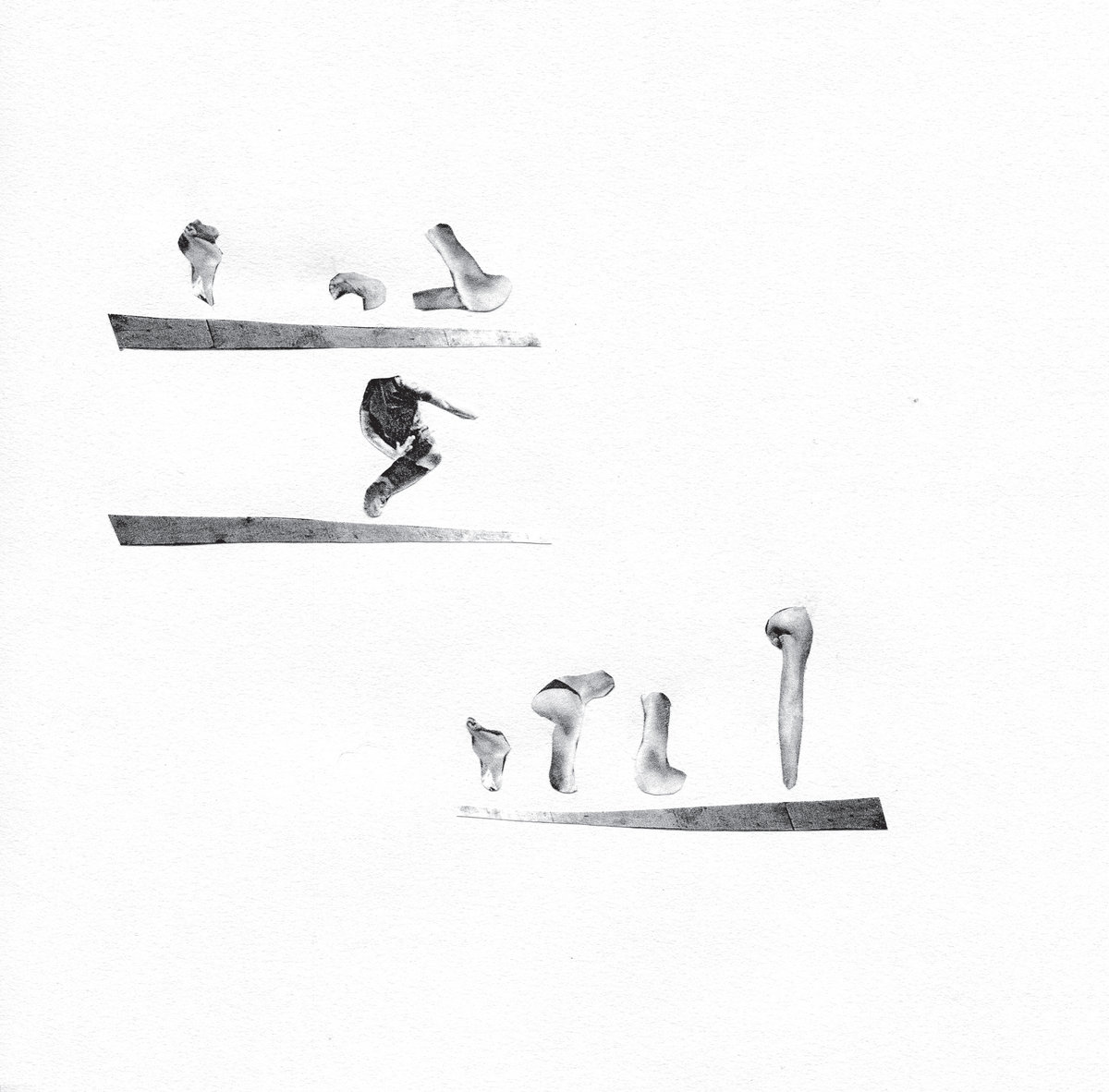 Since the release of The Gland Canyon in 2007, Raub Roy’s ongoing project Horaflora has increasingly moved toward an organic approach to quotidian improvisation that melds seamlessly with its surroundings, the two entwining and interacting to produce unforgettable phantasmagorias of colorful textures. Eaves Drop is Roy’s first non-live solo LP since 2012, but such a significant gap does not at all translate to a lack of inspiration or improvement upon what came previously; this lovely vinyl edition offers three new tracks that are, without a doubt, Horaflora’s best work yet. Each piece breathes like a living thing, slow inhales and exhales churning the flow of sound into languid eddies and currents, moving between ever-unpredictable racket generated by various tabletop configurations and deeply immersive environment recordings (accompanied by some other bells and whistles along the way, of course, such as brief snatches of saxophone or the plunks of a cheap plastic synthesizer) with breathtaking ease. As with Shots’ Private Hate last year, there is certainly a distortion of participation and pure perception occurring here, but on Eaves Drop these blurred boundaries are simultaneously more defined and harder to actually make out—take the concluding “Motorcycles Were Suddenly Observed at All Hours,” for example: were one to hear the spacious binaural capture of a massive, humming warehouse and the screeching string creak-drones that follow it separately, it wouldn’t be at all difficult to discern which was performed and which was simply observed, but when placed in such close proximity each casts a shadow of ambiguity upon the other. There is also humanity aplenty throughout, overheard conversations and laughter of playing children and the soothing swish of bustling traffic, just one of the countless layers of this album that are seemingly allowed to grow, intermingle, and flourish on their own.
Review: Unknown Artist – Campfire Tales (Tribe Tapes, Oct 14)
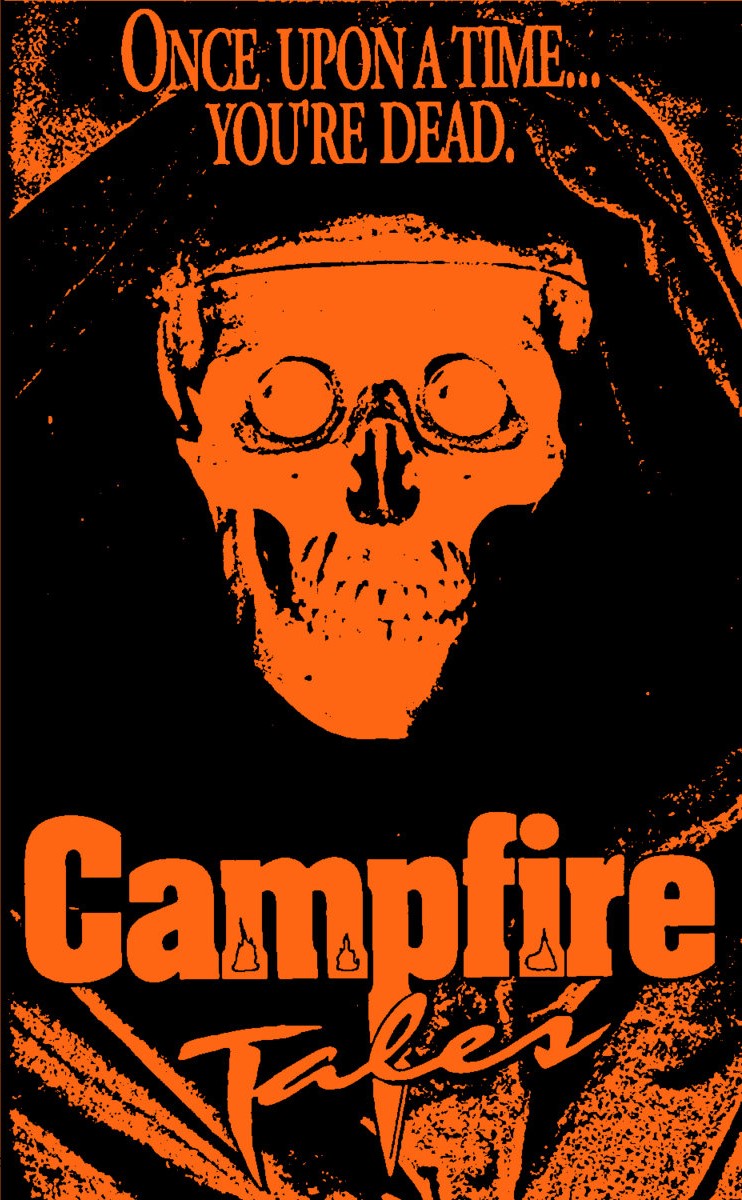 Releasing your work anonymously—and, by extension, all degrees of personal/authorial removal, whether it is credited to an artist or not—is an artistic decision in itself, with its own benefits and drawbacks. The main issue one encounters is that pretty much all of us, being human, want to feel emotion from things, and for most of us, being lovers of humans, instinctively want to see or hear or feel the creator come through in their creations. But unclaimed collages like Sensitivity Training and this pleasingly spooky sample suite from an unknown source on Tribe Tapes have proven to me that not only does the lack of an attributed arranger have a palpable effect on the material, but it also functions differently for different works. While Sensitivity Training bypasses both the grotesque indulgence and the unethical exploitation of Buyer’s Market—in part due to its anonymity and in part due to the much more compassionate and purposeful compiling—to open the gates for true emotion and empathy, the half-campy, half-unsettling tales, tunes, and textures of Campfire Tales gain a complementary obscurity from the omission, and with the saturated black ink xeroxed onto orange paper the album becomes something intoxicatingly mysterious. The ordering of the sounds sounds both episodic and cohesive somehow, as bits of distorted guitar or pounding piano, the ominous trill of crickets at night, and various audio-horror vignettes (including the “hook man has escaped” story; what does it say about me that the first thing I thought was, Is this from Scream Queens?) that never reach the tense, terrifying conclusions they seem to be barreling toward, leaving us with unfinished business in our heads that often carries over to whatever bizarre segment is up next. It’s a wild ride, for sure, and perfect if you are into the hermetic Halloween thing: Pumpkin Witch, Cursed Pumpkin and all of the “pumpkin synth” projects (yes there are quite a few), or even A Cool Dark Place to Die.

