
 The first ‘harsh noise wall’ tape I ever came across was a little C30 called Kriemhild Anal Saxon. This was also the first release I heard by Taskmaster, whose relatively sparse but astonishingly consistent catalog embodies the best parts of the classic wall sound. 13 years after that tape—as well as Taskmaster’s first self-titled album—was released, a new document comes to us via FTAM Productions. This new eponymous cassette contains everything I love about the project, and framed by a distinctly modern crunch are Taskmaster’s trademark dynamics, which, paradoxically, are at once varied and static. Yes, both sides of this tape would probably display a completely blacked-out waveform, but as with every release I’ve heard by this artist there is much more going on than that; tendrils of clashing textures emerge under cover of formidable, squalling noise that crackles and sputters with terrifying strength, and even a litany of repeated listens may not reveal all of the carefully layered chunks that make up each track. The concrete of Taskmaster’s walls is more molten than most; these tracks are lush, oppressive, and hypnotically immersive. And that initial blast of the second side has to be the best and most punishingly cathartic I’ve heard this year.
Category: Reviews
Brief summaries intended to describe and express my enjoyment of albums. My opinions are not the focus: I purely seek to facilitate discovery.
Review: Martin Brandlmayr – Vive Les Fantômes (Thrill Jockey, Jun 14)
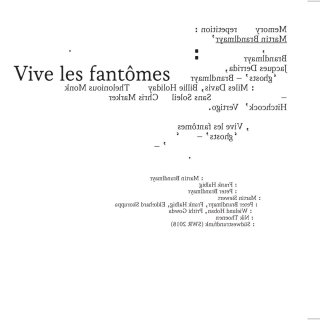 Martin Brandlmayr’s first major foray into radio art is so much more than just a “radio play.” Vive Les Fantômes, which was debuted on the German station SWR last year, is a single 53-minute collage that draws from an eclectic well of material, including everything from Thelonious Monk samples to field recordings to the artist’s own distinctive drum set improvisations (there’s even a moment where the instantly recognizable trumpet wails of Bitches Brew crop up). I won’t attempt to summarize the whole piece, because Brandlmayr’s description of the project on the Thrill Jockey site definitely does that better than I ever could, but it’s a much easier task to enumerate what makes it great. The work’s episodic structure, stop/start dynamics, and disparate elements are consistent with a faithful knob-twiddling radio piece, but everything is cemented together by unifying themes and motifs (spoken word excerpts by Jacques Derrida, resonant vibraphone chords, recordings of urban environments) that draw loose but concrete connections between segments. There’s also an ever-present sense of forward motion, and even in moments of total silence you’re aware that there’s still plenty to come. I also love how Brandlmayr uses voice; the recurring quote about astronauts and the sample of a pilot saying “we’re approaching the…” introduce an odd mixture of unease, tension, and suspense.
Review: Dave Public – More Than This (Hot Releases, Jun 14)
 Tape music is often so engaging to listen to purely because of its inherent physicality; artists work with sound in one of its most versatile tangible manifestations, looping and yanking and scraping it across the magnetic heads. These verbs—especially “yank”—are fitting when describing the first track on More Than This, Providence-based musician Dave Public’s most recent solo release. On “Same Old Scene,” distorted clatter, gargles, and other unintelligible noises are manipulated with merciless irreverence, and a tremendously disorienting and immersive effect is created by the way in which all of the sounds seem to be constantly being pulled in every direction at once. “Prairie Rose,” a more reserved composition that serves as a foil to its much rowdier predecessor, takes the same traits in an entirely different direction. While “Same Old Scene” envelopes the listener with dynamic chunks of gunk unfurling across the stereo space, “Prairie Rose” spreads itself out like a gossamer cloud, drifting along at a pace not nearly as frenetic or restless. “NL51217” is a logical conclusion to the tape, a 2017 performance in North Carolina that spans the entirety of Public’s repertoire amidst overwhelming collages of muddled field recordings, surreal sound poetry, and gelatinous muck.
Review: Apostle – Sufferer (self-released, Jun 14)
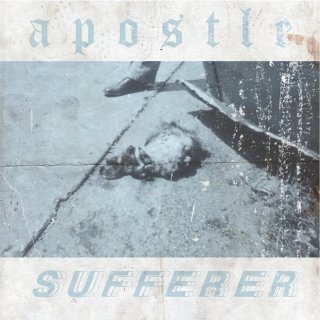 Dark, hypnotic, and at times downright scary, Sufferer doesn’t relinquish its strangling hold save for the more reserved interlude track “Sparrow,” which is still shrouded in the same oppressive, nocturnal atmosphere as the more aggressive songs. Bathed in resonant low end and waves of distortion, Apostle’s palette of crushing blast beats, meditative rhythmic repetitions, and infectious breakdowns is united by an all-consuming production style. Bassist Cameron Austin’s vocals seem to originate from less metallic influences, and most of the lyrics are pretty easily discernible within his desperate, strained shouts, but they sound even more despairing as they struggle to escape the gravitational pull of the massive instrumentals. The band works up quite a racket for a three-piece, structuring their endeavors around droning blankets of guitar fuzz and relentless pounding drums. An overwhelming feeling of impending doom takes hold on “Nearer My,” some seriously nightmarish heights are reached on “Amor Eterno,” and the full potential of Apostle’s eclectic formula is reached with “Stasis,” a monster of a track that lulls with slowly developing grooves before crashing down into an insane climax.
Review: Alan Courtis & Aaron Moore – 2283 (Gertrude Tapes, Jun 2)
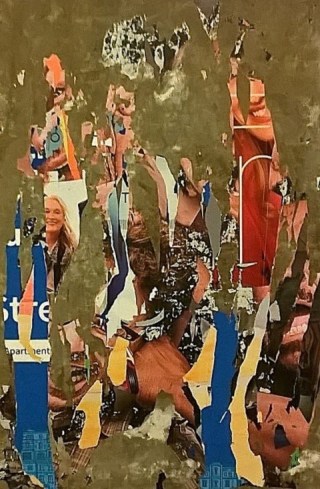 As members of Reynols and Volcano the Bear, respectively, Alan Courtis and Aaron Moore are no stranger to outsider music. Throughout each musician’s career with those bands, their solo work, and a host of other collaborative endeavors (Dragon or Emperor, Guignol, Mutantea, Textile Orchestra, the list goes on), they’ve examined and worked with countless unusual sound sources, techniques, and performance settings. 2283 is their fifth release from the pair’s ongoing duo project, almost entirely recorded during a brief meeting at Moore’s apartment in New York, and sees the two artists both composing and improvising with toy instruments, primitive electronics, percussion novelties, and their own voices. It’s a bizarre and magnetic amalgam of minimalist free music and occult folk headspace, with each track falling somewhere between either end of that strange spectrum. The A side is quite reserved, the soft clatters, rattles, and rings swathed in a cloak of heavy silence; the space of Moore’s residence is a significant addition to the music, and through its lens the duo’s odd sonic interactions are even more elusive. The following side is more eclectic, with the almost pretty fingerpicked guitar and muttered vocal gravel of “347” and tribal ambience of “296” evoking my favorite Volcano the Bear moments, and though the final two tracks were produced by Courtis using overdubs there’s no drastic shift in presence that reduces or overshadows the impact of what came before.
Review: Posset & Charlie Ulyatt – A Jar Full (Crow Versus Crow, Jun 4)
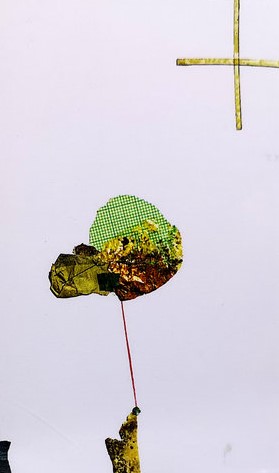 Joe Murray, who performs and releases music as Posset, is one of the most prolific magnetic tape manglers active today. The strangled spoken words, gurgling mouth sounds, and disjointed dictaphone manipulations that pervade his work are more than capable of creating an enrapturing and very distinct atmosphere (see Totally Corporate!, one of my favorite records last year) but don’t seem to be the most versatile sound materials in a live improvised setting. A Jar Full, which sees Murray collaborating with avant-garde cellist and and artist Charlie Ulyatt, pretty much obliterates that assumption. Comprised of tracks made both through long-distance correspondence as well as direct live recording, the tape presents a pairing of instruments that hardly seems effectual… yet the results are astounding. The first side, composed of three tracks created by each musician playing over recordings sent by the other, documents a treasure trove of whimsical, dynamic improvisations, traipsing and trampling through typical duo conventions as Ulyatt’s bow squeals and percussive extended techniques call out, respond, and intermingle with Murray’s fast-paced cut-ups and impatient playback alterations. The untouched silence that squirms between the awe-inspiring conversational moments of “At This Lost Hour” and constricted cries of “High Head” is abandoned on “At the Angel,” the final track, which documents the duo’s first in-person live performance. It’s a restless, scrabbling conclusion to the tape, the audible space of the venue providing a welcome counterpoint to the claustrophobic sterility of the first side.
Review: Shuta Hiraki – Across the Empty Lot (Falt, Jun 9)
 Apathetic, disastrous scourges on the planet though they are, human-made urban sprawls have the ability to produce some truly gorgeous sounds. On Across the Empty Lot, Japanese sound artist Shuta Hiraki documents two occasions of astute, attentive environmental listening, in practice simply capturing construction on a bridge and its surroundings but in actuality immortalizing a sublime instance of natural harmony. The unprocessed presentations that span the two sides of Across the Empty Lot are dominated by a persistent tonal drone that weaves itself through auxiliary intrusions of rustling leaves, chirping birds, distant voices, and the clatter of the construction itself. Similar to Ludwig Berger’s work Cargo, the spatial resonance of industrial processes (in this case, cement mixers) at a distance creates this almost organ-like hum, which provides an unexpected yet undeniable musical backbone for the other elements that appear in the recordings. Though already far from a trivial field recording, the meditative, calming effect of Across the Empty Lot is amplified by Hiraki’s faithful conveyance of such a beautiful sonic event.
Review: Modelbau – A World of Difference (Regional Bears, Jun 7)
 Unlike The Invaders, the other Modelbau tape from this year I’ve heard, there isn’t nearly as much sonic permanence to be found in A World of Difference. Here, the seasoned, prolific musique concrète master works with fleeting rhythms, reverberations, and pulses, constantly projecting new elements into the mysterious worlds he creates. It’s not impatience or indecisiveness that lurks behind these unusual choices, nor do they lead to a lack of cohesion; instead, the effect is an endlessly evolving and shifting sound construction, a jittery, surreal collage of disparate injections that keeps you on your toes. De Waard’s segmented approach manifests as music that is difficult to describe summarily because of how unpredictable and disjointed it ends up being. The two fifteen-minute sides of the tape pulls together auditory items in an episodic fashion, progressing from decaying, low fidelity synth chords and mangled radio extracts to blasts of white noise and moments of textural tactility on the first to stretches of unadulterated field recording, unusually mixed folk music loops, and some truly strange electronica on the second. Like the cover, where aggressively uniform, flat, digital graphics are superimposed upon a distorted photograph, the music on A World of Difference is a disconcerting and inexplicably intriguing hodgepodge of contradictory ingredients.
Review: Arboreal – Deconstruction (Perpetual Abjection, Jun 3)
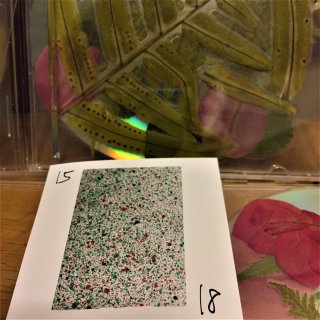 There are a lot of possibilities in composing wall noise in terms of the kinetic identity the artist wishes to bestow upon their creation; some pieces blaze forward with drive and fury; others are stubbornly stagnant, clawing and fighting temporal progression like an anchor along the ocean floor. Still others, like Deconstruction, seem to move independently of a linear direction, instead expanding outward from a defined center. Arboreal (a.k.a. Polwach Beokhaimook) allows his delicate, crackling structures to worm their way through the soil like the plants that initially inspired the work, fanning out from the stalk or trunk which here takes the form of a contained, choked rattling sound. As you spend more time with the single track on Deconstruction, the emanating static seems to trade prominence with this interior point, the former’s more expansive stereo movements drawing attention away from the latter’s obstinate stasis. Also present is a barely perceptible hiss, which could either be just a remnant of the techniques used to create the wall or even a muffled nature recording; I’m not really sure. What is certain, though, is that it is one of several elements that casts this release as a lushly detailed and intimate examination of organic growth, imbuing this relatively simple framework of sounds with the familiar characteristics of life.
Review: Nate Scheible – Indices (Never Anything, May 27)
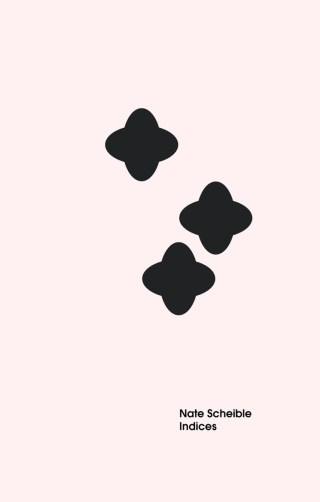 For all of its delicate beauty, Nate Scheible’s brand of ambient music always has undercurrents of tension, hints of uneasiness buried beneath the floating drifts of effects-laden keyboard drones and samples. Indices has none of the vocal elements that were explored on Fairfax, the Washington, D.C. artist’s previous tape release, but no less of the woozy subliminity and emotional resonance. “A01” unfurls with bubbling movements drenched in reverb, soft gossamer waves of sound expanding outward atop a base of dusty tape recordings and crackling artifacts, setting the stage for more reserved sketches of this wonderfully diaphanous atmosphere—which, although I’m no synæsthete, is quite in line with the soft pink that was chosen for the cover design. As each of Scheible’s carefully constructed miniatures progresses, they move past beginnings fraught with uncertainty and strangeness—such as the abstract manipulations that introduce “A03” or the stifled chokes at the start of “B02″—into gorgeous stretches of harmony and tonal resolution like a deep sigh and a flop down on the couch after a long day of work. As you can probably guess, this is the perfect tape for me right now. By the time those rustling branches (or whatever they are) that conclude “B03” fade into existence, I am ready to drift away.

