
 Many years ago I discovered and listened to Windswept Trees & Houses, the first compilation by the Jewelled Antler Collective, and since then life has never been the same. Through the wide-eyed, wonder-filled woodland warble of bands like The Family Apostolic, Thuja, and The Knit Separates I gained a new appreciation for nature that far surpassed the simple acknowledgement I’d always held; the outdoors became not just a place to be but a place in which to do, to make and collect and listen. noemienours hails from Stockholm, many miles from the JAC’s home base of the sun-drenched west coast (although Kemialliset Ystävät were featured on Heat & Birds, the follow-up to Windswept Trees), but the sublime, artfully naïve reverence of these “all-ages bear-saving non-ideological vegan drug-free home-recorded lullabies from the forests of Sweden” gives me that same childlike burn for adventure, possibility, and harmonization. Carefully laid to tape using an 8-track reel-to-reel, the delicate meanderings that comprise Tardigrade Bouncing are speckled with the dusty brightness of tape hiss; clean, plucky electric guitar; and gentle, often barely audible percussive backing that imbues many of the tracks with motion simultaneously driving and lethargic. But while these soft serenades bolstered by noemienours’ haunting vocals and sparse, elegant piano are sunny enough to make you smile, they also hold a deeply elegiac current that only reveals itself upon repeated listens. This artist has a profound love for living things of all forms, and any such empath has plenty to lament in the twisted world we’ve built—we’re quite lucky that they chose such an unforgettably gorgeous way to do so.
Author: Jack Davidson
I like to listen to, read and write about, and play music.
Review: Joe Coghill – Conrad Snae (Czaszka, Apr 6)
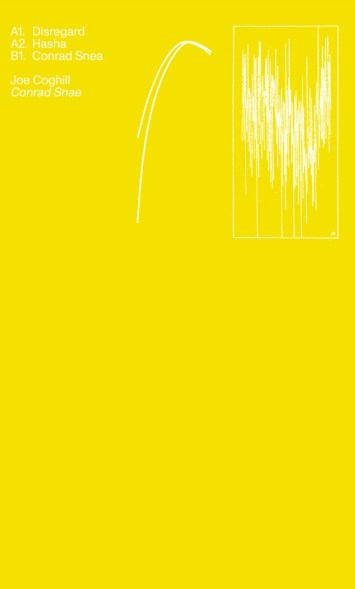 I know Joe Coghill from his enigmatic project Free Magic Show, which also includes Czaszka operator Michał Fundowicz, but Conrad Snae is a completely different beast. The dense, unclassifiable pieces that occupy this modestly sized C22 have that air about them—you know, where it seems like there’s some hidden meaning or aspect that makes them so compelling but it’s impossible to find or isolate. Bestial screams, churning digital chaos, and molten rhythm-semblances stuff the A side, both “Disregard” and “Hasha” adopting an under-the-microscope type approach that makes me think of projects with similarly “scientific” lenses, like Jazkamer. The latter track whips and writhes in a stylistic no-man’s-land between the weirder, more abstract outskirts of beat-heavy club music and the biting artificial tornadoes of pure data composition, forming a hypnotic, pulsing throb both difficult and danceable. The title track, which occupies the entirety of side B, unfolds like bargain-bin noise cobbled together from materials found in the electronics section of a secondhand shop, still as distinctly synthetic as the preceding pieces yet also confusingly organic, like the queasy burbles of an empty stomach or subterranean gases bubbling in the waters of a murky swamp. Only Coghill could make computer castoffs this smelly.
Review: Monumental Figures – Agony (The Chaos Noise, Apr 5)
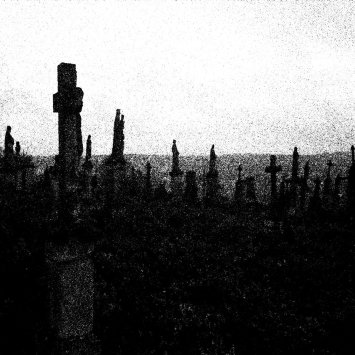 Even if I wanted to nitpick (and I don’t, for once) the only significant flaw I could find in Agony is that it’s way too damn easy to get lost in. Wall noise is almost always great music to play while reading or working—especially if you’re in a place with a lot of distracting sounds—because it’s loud enough to drown out unwanted ambience yet sufficiently minimal to avoid being a distraction itself, but this three-plus-hour monstrosity is so mysteriously magnetic that it frequently absorbs my full attention without my even knowing it, and all of a sudden half an hour has gone by since I’ve typed a single word. The only album from Moscow project Monumental Figures so far this year, and the first that isn’t a single self-released hour-long track adorned with a plain black cover, Agony is unassuming in its genius; when “Deadly Silence” first materializes it seems like a fairly conventional crunch-crush affair, but upon continued listening the wall’s spectacular density becomes progressively more apparent. Churning coils of heavyweight distortion both surround and invade the center channel; overstuffed layers boil and buck under each others’ stifling pressure; an impossibly forceful upward momentum like an eternal eruption becomes palpable. The following “Exhumation” feels very much like a contrastive response to the piece that precedes it; the noise is much rounder, more grimy and sluggish like decomp-slime oozing out of a casket, but no less enthralling. In turn, the concluding “Fresh Flesh,” aside from having one of the most addicting titles I’ve seen in a while, sputters with constrained dirt-caked crumble that brings the ambitious suite to a fitting close. To say Agony is far from the worst way to spend an eighth of a day would be an understatement.
Review: Crash at Every Speed – Departure Crash (Breaching Static, Apr 2)
 Departure Crash has its fair share of abrasive, annihilating stagnant noise, but for the most part the five pieces that comprise this new CD from one of my favorite of Richard Ramirez’s literally countless aliases have such potent staying power because of how fully and comprehensively immobilizing their presence is. The harsh static of the first untitled track is expectedly loud and punishing right out of the gate, one soon becomes aware of a subtle but palpable reticence at its base (it may be easier to pick this out if you’ve previously heard Ramirez’s other wall-based projects, many of which do not share this quality), a meditative current that transforms the listening experience from appreciative cowering and grimacing to contemplative introspection. This structure continues throughout the contents of the disc despite the ensuing tracks’ sonic diversity; the second sluggishly materializes into and dissipates out of its soot cloud–like form, while the fourth rides an overblown but somehow nonintrusive rumble of distorted crunch. Personally I could do without the news samples that crop up in the final two sections, which greatly reduce the enjoyment factor of the fourth and infuriatingly delay the actual noise part of the fifth, but the approach taken in constructing these walls is unique and successful enough that I can mostly overlook those missteps. Ever wonder what that thick, uncomfortable silence following those graphic car crash videos you had to watch in secondary school would sound like run through a pedal chain? Now you know.
Review: Symbiotique – The Maximal Effect (Mother Brain, Apr 2)
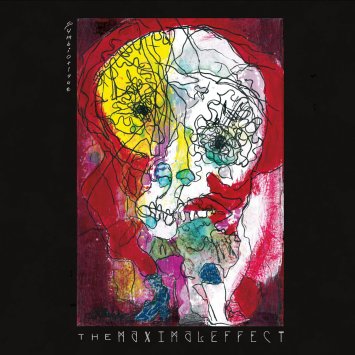 Much like an album with a similar approach I reviewed quite a while ago (Nathan Corder and Tom Weeks’s Anaconda), the pairing of instruments that characterizes Symbiotique seems like it shouldn’t work. By that I mean the idea of coupling extremely abstract, atonal electronic synthesis with largely conventional reed and brass playing doesn’t look very auspicious on paper, at least not to me, but The Maximal Effect immediately won me over regardless; not only does Seth Andrew Davis contribute lush layers of plasticky, artificial effervescence, but he also processes Michael Eaton’s saxophone and/or flute in real time, rendering even the most straightforward licks and runs in an unstable, fragmentary light. After the opening title track, each of the lengthy improvised pieces arise from some sort of conceptual inspiration—e.g., “Accumulation by Dispossession” from the ideas of David Harvey and Karl Marx, “Via Affirmativa” from Barth’s “A Few Words on Minimalism”—which may be why they never feel noodly or aimless. These are musical conversations first and foremost, and one imagines what a fascinating spectacle seeing the duo perform live would be, but in more holistic terms the swirls of sound always seem to flow from a single source, as if a mysterious pressurized gas canister has sprung a leak or someone lifted the lid of the devil’s toybox for a bit too long. The sprawling “Plastic Capitalism” is a great example of this and a clear standout on the album; the momentum of the interplay that mounts in the first half is exhilarating, and even when the pair calms things down the music quietly but stubbornly persists, seeping under the doorway with a creeping hiss.
Review: Raung Jagat Synthetic – Synthetic Vocabulary (Prakarsa, Mar 29)
 As terrifying as the prospect is, Synthetic Vocabulary may provide a glimpse into the bleak future that lurks beyond the stubborn development of increasingly sapient artificial intelligence. I’m not talking about the technological singularity itself, but rather the point a few centuries beyond that, when the dwindling human race are now used as forced labor, entertainment, and every other fucked-up way we abuse animals now while the bourgeois androids and disembodied operating systems sit atop sleek chrome thrones. Having evolved beyond the need for any sort of audible verbal communication, archaic “text-to-speech” programs are now mean-spirited novelties, used to spam unintelligible gibberish at their flesh-and-blood servants who lost all language long ago. But this auditory abuse ends up having an unintended effect. As abstract vocalist Rully Shabara is quoted as saying on the release page, language is “also capable as a medium of much more complex multi layered message such as expression and non-verbal intents [sic]”; what sounds like innocuous nonsense to the machines holds emotion and catharsis that only our brains can unlock. Alliterative semiotic deconstructions like “Max, Lisa” evoke the unutterables of lightning-fast thought processes and inner musings, almost entirely wordless pieces such as “Thena” resonate with a peculiar poignance, and the title track may just be the revolutionary anthem of the future—is there anything more powerfully human that plastic and fucking?
Review: Adam Bohman, Keisuke Matsui & Graham MacKeachan – Tommy Rot Trio (Hundred Years Gallery, Apr 1)
Tommy Rot Trio is kind of a terrible base phrase for an acrostic—and the album deserves much more of an in-depth analysis than this. But my head hurts and I’m kind of set on this idea now, so.
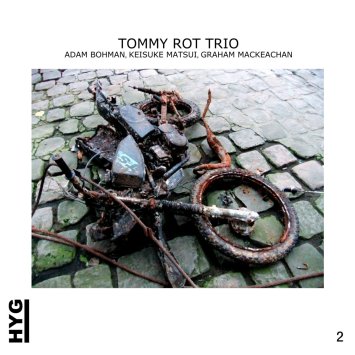 Tensile strands and strings pulled to breaking.
Obtuse in its whimsical yet restless skitter.
Metallic scrapes, squeaks, and shudders reign supreme.
Mazelike, winding, spacious.
You can almost hear the absences in between.
Rigidity made fluid.
Oscillating roles: strings, objects, electronics.
The tactile textures of tautness and tension.
Triangular configuration.
Rips, rattles, shakes, clatter.
Intimate despite its alienness.
Open and closed spaces.
Mix: Staring Into Space, Amps on High and Tilted Skyward
The title of this mix comes from the artist description on RST’s Bandcamp page. A slab of heavy, enveloping, rough-hewn drone music: pillars of light exploding from your body and stabbing through the clouds.
00:00. Bügsküll – “Intro” from Phantasies and Senseitions (Road Cone, 1994)
00:16. Pelt – “Ashes of a Photograph” [excerpt] from Effigy (MIE, 2012)
08:41. Natural Snow Buildings – “Black Pastures” [excerpt] from Daughter of Darkness (Blackest Rainbow, 2009)
16:28. My Cat Is an Alien – section I [excerpt] of Cosmic Light of the Third Millennium (Important, 2006)
20:09. Alex Cunningham – “Faith” [excerpt] from Rivaled (Void Castle, 2021)
28:05. K-Group – “Carrier” from K-Group (Corpus Hermeticum, 1997)
33:14. Jim O’Rourke – Happy Days [excerpt] (Revenant, 1997)
40:17. RST – “Transform” from Warm Planes (Corpus Hermeticum, 1999)
49:37. Axolotl – “Way Blank” from Way Blank (Psych-o-Path, 2005)
55:46. Bada – “Roj Friberg” from Bada (Pomperipossa, 2020)
Review: Phicus – Liquid (Tripticks Tapes, Mar 26)
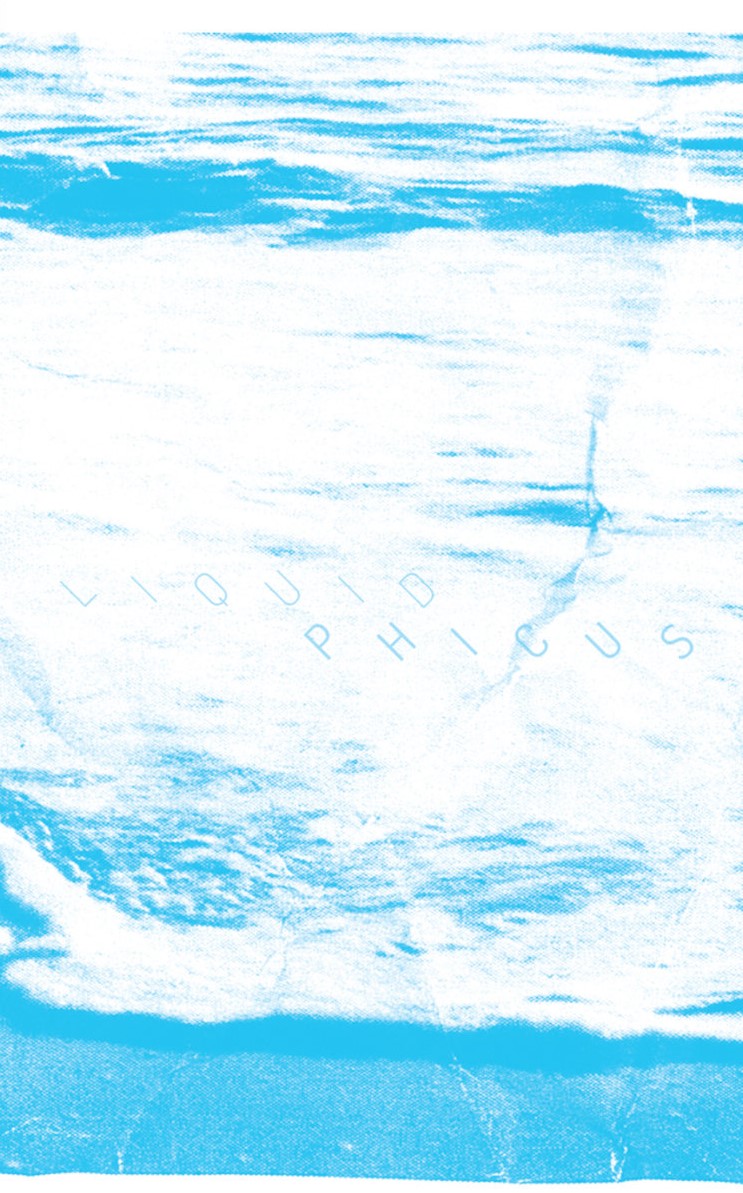 With Liquid, Spanish trio Phicus takes a significant step beyond their previous work toward something much greater. Recorded as a stylistic foil of sorts to the sessions that yielded last year’s fiery but ultimately edgeless Solid, the lengthy improvised takes that became “Hg” and “Br” (interestingly, both mercury and bromine are liquids at room temperature, but together, as HgBr2, they form a crystalline solid) are patient, considered, and meditative. A careful extended-technique delicacy in each member’s approach results in the band’s most spellbindingly atmospheric interactions yet: muscular double-bass lumbers are traded for hypnotizing legato and high-on-the-neck squeaking that bears an uncanny resemblance to some kind of brass instrument; shredding scales and dissonant chords have been dissolved into Surface of the Earth–esque amp rumble; and the skilled hands that once harnessed virtuosic percussion cacophony now deal in textural resonance and feedback-wracked Prévost bowings. The entirety of the nearly full-LP-length “Hg” swells with subtle but deliberate momentum, slowly asserting the true extent of its massiveness like an impossibly sluggish subway train emerging from a tunnel, brakes squealing and sparking, heavy metal hull groaning and grumbling, and it’s only once this train has departed that one can truly fathom what was in front of their eyes/ears to begin with. The more diminutive “Br,” which runs for just over 12% of the previous track’s duration, brings the tape to a fitting close with fragile, almost elegiac strings, strikes, and shrieks. For those who sorely miss trio-era AMM, Marginal Consort, or (more recently) Mural.
Review: E. Jason Gibbs – Wolves of Heaven (Orbit577, Mar 27)
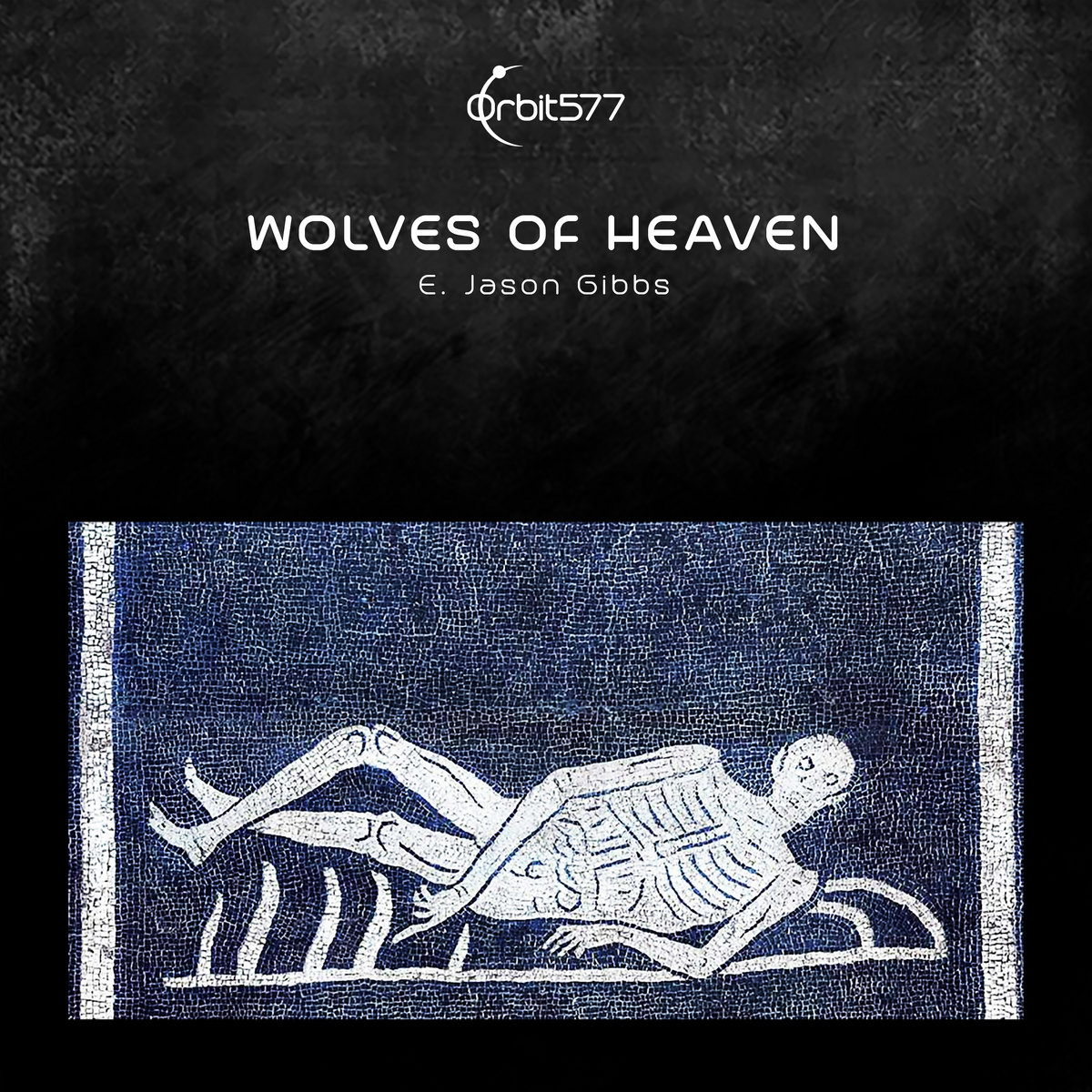 Though surely few predicted as much at the time (as Owen Maercks puts it, “if you had asked me 40 years ago… I would have laughed in your face”), the peerless legacy of Derek Bailey lives on piecemeal in those who find inspiration in his techniques. Sometimes this influence is nestled so deep within the essence of an artist’s music or playing style that it’s difficult to identify at first, and other times it’s so prominent that immediate comparison is inevitable. Guitarist and cellist E. Jason Gibbs’ new Wolves of Heaven CD is kind of both. His agile, gestural use of dissonant harmonics, string rattle, and atonal percussive strikes instantly evoke those of the late legend, but there’s something about Gibbs’ approach that evokes something a bit more homey and folkish. Both the track titles and the music itself imply a reverent earthiness; on cuts named “Raven and Coyote Celebrate Their Good Fortune” and “Wet Rocks and Roots” he’s situated within a clear and palpable organic environment, even though the presence of ambient noise mostly acts as more of an accompaniment than the other side of an improvisational interaction. When I said the Bailey connection was both obvious and subtle I meant that it took me much longer to realize why Wolves of Heaven resonates with me more than most abstract guitar material of similar character: with Gibbs’ breath, surroundings, and bodily movements all captured alongside the foregrounded picks and plucks, he harnesses the same exhilarating physicality that makes records like Music and Dance and Aida so memorable. For all of its primitivist sensibilities and grasps at some semblance of convention, Wolves of Heaven is an addictingly odd outing that demands full attention.
 Noise Not Music